Table of Contents
More from Blog
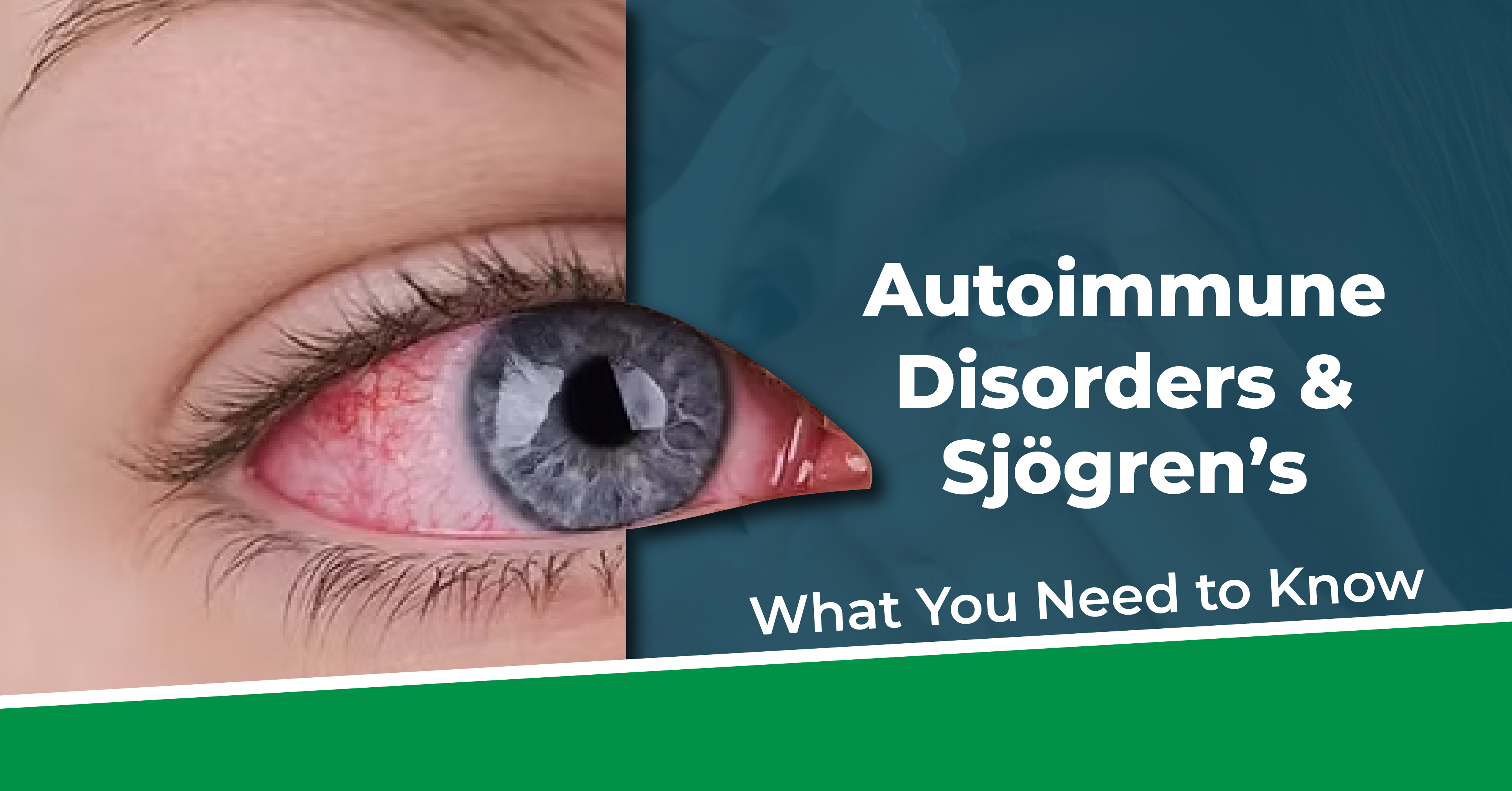
Autoimmune Disorders & Sjögren’s: What You Need to Know
25 Mar, 2026
Introduction
Sjögren’s Syndrome is a chronic autoimmune disorder in which the immune system attacks the body’s moisture-producing glands, leading to persistent dry eyes and dry mouth. It often occurs alone or alongside other autoimmune diseases.
Autoimmune Disorders - A Brief Overview
Autoimmune disorders occur when the immune system mistakenly targets healthy tissues. Rather than protecting the body from infection, immune cells attack organs, glands, or joints, causing chronic inflammation and dysfunction.
Common autoimmune conditions include:
- Rheumatoid arthritis
- Systemic lupus erythematosus
- Multiple sclerosis
- Type 1 diabetes
- Sjögren’s Syndrome
Many patients experience overlapping autoimmune diseases, which can complicate diagnosis and management.
Understanding Sjögren’s Syndrome as an Autoimmune Disease
Sjögren’s Syndrome primarily affects the exocrine glands, especially:
- Lacrimal glands (tear production)
- Salivary glands (saliva production)
Primary vs Secondary Sjögren’s
- Primary Sjögren’s Syndrome occurs on its own
- Secondary Sjögren’s Syndrome develops alongside another autoimmune disorder, such as rheumatoid arthritis or lupus
Both forms can cause systemic symptoms beyond dryness.
Symptoms and Daily Impact
Core Symptoms
\
The hallmark symptoms include:
- Chronic dry eyes (burning, grittiness, light sensitivity)
- Persistent dry mouth (difficulty swallowing, speaking, or tasting)
These symptoms often require ongoing autoimmune dry eye treatment and dry mouth medication to support daily comfort.
Systemic Symptoms
Some patients may also experience:
- Fatigue
- Joint and muscle pain
- Swollen salivary glands
- Dental decay and oral infections
Diagnosis in the Context of Autoimmune Disorders
Diagnosing Sjögren’s Syndrome can be challenging, particularly when other autoimmune conditions are present.
Diagnostic Approach
Diagnosis typically involves:
- Symptom history and clinical examination
- Blood tests for autoimmune antibodies (Anti-SSA/Ro, Anti-SSB/La)
- Eye tests to assess tear production
- Salivary gland evaluation
Because symptoms overlap with medication side effects and ageing, specialist assessment is often required.
Treatment Overview - Managing Autoimmune-Related Dryness
There is currently no cure for Sjögren’s Syndrome, but treatment focuses on symptom control, gland stimulation, and complication prevention.
General Management Strategies
Management may include:
- Artificial tears and prescription eye drops
- Lifestyle and environmental modifications
- Regular dental and ophthalmic monitoring
- Prescription medications to stimulate secretions
How Key Treatments Work (High-Level Overview)
Pilocarpine Tablets and Cevimeline Capsules
Pilocarpine tablets and cevimeline capsules are prescription medications used to manage dryness in Sjögren’s Syndrome.
- Both act as parasympathomimetic agents
- They stimulate muscarinic receptors
- This increases natural saliva and tear production
Pilocarpine 5 mg (Pilocarpine Hydrochloride Tablets USP) is FDA-approved for treating dry mouth and dry eyes in patients with Sjögren’s Disease and is used under medical supervision.
Autoimmune Dry Eye Treatment and Supportive Devices
Autoimmune dry eye management may include:
- Prescription or preservative-free eye drops
- Anti-inflammatory therapies (specialist-guided)
- Eye moisture goggles, which help reduce tear evaporation and protect the ocular surface, particularly during sleep
These approaches aim to stabilise the tear film and protect eye health over time.
Dry Mouth Medication and Supportive Care
Dry mouth management may involve:
- Saliva-stimulating medications
- Sugar-free chewing gum or lozenges
- Good oral hygiene and regular dental care
Dry mouth medication supports comfort, speech, swallowing, and oral health when gland function is impaired.
Common User Questions About Sjögren’s and Autoimmune Disease
Is Sjögren’s always linked to another autoimmune disorder?
No. Sjögren’s can occur alone (primary) or alongside other autoimmune conditions (secondary).
Does autoimmune dry eye differ from age-related dry eye?
Yes. Autoimmune dry eye is driven by immune-mediated gland damage and often requires more targeted, long-term management.
Can treatments restore normal gland function?
Treatments help stimulate remaining gland activity and relieve symptoms but do not reverse immune-related damage.
FAQ Section
What makes Sjögren’s an autoimmune disorder?
Sjögren’s occurs when the immune system attacks moisture-producing glands, leading to chronic dryness and inflammation.
What medications are used for Sjögren’s-related dryness?
Prescription options may include pilocarpine tablets or cevimeline capsules, alongside supportive eye and oral therapies.
Are eye moisture goggles effective?
Eye moisture goggles can help reduce tear evaporation and improve comfort, especially for night-time symptoms.
Is Sjögren’s considered a serious condition?
It is usually manageable but requires monitoring, as it can affect quality of life and, in some cases, other organs.
Should treatment be managed by a specialist?
Yes. Rheumatologists, ophthalmologists, and oral medicine specialists often work together to manage Sjögren’s care.
Key Takeaways
- Sjögren’s Syndrome is a chronic autoimmune disorder
- It commonly causes dry eyes and dry mouth
- It may occur alone or with other autoimmune diseases
- Management includes medications, supportive devices, and specialist care
- Early recognition supports better symptom control
Conclusion
Sjögren’s Syndrome is a complex autoimmune condition that affects moisture-producing glands and can significantly impact daily life. Understanding its relationship with other autoimmune disorders helps patients recognise symptoms earlier and seek appropriate care.
Management often involves a combination of supportive therapies and prescription treatments. Options such as pilocarpine tablets, cevimeline capsules, targeted autoimmune dry eye treatment, eye moisture goggles, and appropriate dry mouth medication can help stimulate natural secretions and improve comfort when used under medical guidance. Ongoing specialist care remains essential for long-term wellbeing.
This content is for educational purposes only and does not replace professional medical advice, diagnosis, or treatment.